

Have you ever tried to send crypto or buy an NFT, only to see a mysterious extra charge added to your total? That extra charge is what the crypto world calls a “gas fee.” If you are new to blockchain technology, these fees can feel confusing, frustrating, and completely unpredictable.
But here is the good news: you do not need a computer science degree to understand them. In fact, understanding what is gas fee in crypto is your first major step toward becoming a savvy investor.
Let’s break down exactly how these fees work, why they exist, and most importantly, how you can pay less of them. If you want to dive deeper into how digital assets move, check out our guide on [Understanding Crypto Transactions].
Article Summary
In this guide, you will learn:
- The simple definition of a crypto gas fee.
- How gas fees are calculated and where your money actually goes.
- The difference between base fees and priority tips.
- How recent 2026 network upgrades have made crypto cheaper than ever.
- Pro tips for saving money using modern Layer 2 networks.
What Is Gas Fee in Crypto?
Think of a blockchain as a massive, decentralized global computer. It does not run on magic; it runs on the computational power provided by thousands of independent participants around the world.
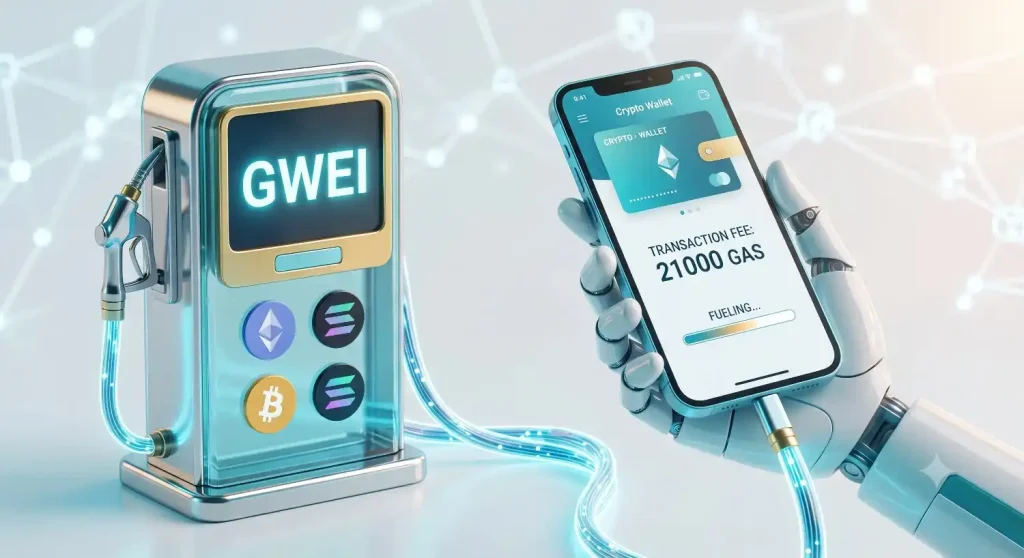
A gas fee is simply the payment you make to these participants—known as validators or miners—to process your transaction. Whether you are sending Ethereum to a friend, swapping tokens on a decentralized exchange, or minting a new NFT, computational energy is required.
Just like a car needs physical gas to drive from point A to point B, a blockchain needs digital “gas” to move your data from one block to the next. The more complex your transaction, the more fuel it takes to execute.
How Are Gas Fees Calculated?
The math behind gas fees used to be incredibly complex. Today, thanks to continuous network updates, it is highly predictable.
When you ask “what is gas fee in crypto,” you are really asking about three different components working together. For major networks like Ethereum, the standard formula looks like this:
Total Fee = Gas Units Required × (Base Fee + Priority Tip)
Let’s break down those three terms:
- Gas Units: This is the fixed amount of computational work needed. A simple money transfer takes 21,000 units. A complex smart contract interaction might take 500,000 units.
- Base Fee: This is the minimum price per unit of gas, determined by how busy the network is at that exact moment. Interestingly, this fee is burned (destroyed forever), which helps keep the token’s inflation in check.
- Priority Tip: This is an optional extra payment you give directly to the validator to bump your transaction to the front of the line during busy periods.
Fees are typically measured in “gwei.” One gwei is equal to one-billionth of an ETH. Measuring in gwei just makes it easier to read the tiny fractions of a cent involved in processing data. Thanks to [recent Ethereum upgrades like Dencun], calculating these costs is fully transparent in most modern wallets.
Why Do Blockchains Need Gas Fees? (The Benefits)
Nobody likes paying fees, but they play a vital role in keeping blockchains healthy, secure, and operational.
- Spam Prevention: Without fees, malicious actors could flood the network with millions of fake, zero-cost transactions. Gas fees make network spam economically impossible.
- Validator Incentives: Keeping a blockchain secure requires expensive hardware and dedicated internet connections. Gas fees act as a financial reward for the people dedicating their resources to keep the network safe.
- Resource Allocation: Blockchains have limited space in each block. Fees act as a fair bidding system, ensuring that the most urgent and important transactions are processed first when the network gets busy.
The Challenges and Risks of Gas Fees
While gas fees are absolutely necessary, they are not perfect. In the past, they have been a major barrier to crypto adoption for everyday users.
During the peak bull markets of 2021 and 2023, severe network congestion caused gas prices to skyrocket. A simple $10 transfer could sometimes cost $50 in fees. If you did not pay enough gas, your transaction could get stuck or fail completely—and you would still lose the fee!
Thankfully, the landscape looks drastically different today. However, sudden market events, massive token launches, or heavy NFT minting days can still cause brief, unexpected spikes in network pricing.
Layer 2 Networks vs. Layer 1: Saving Big on Gas
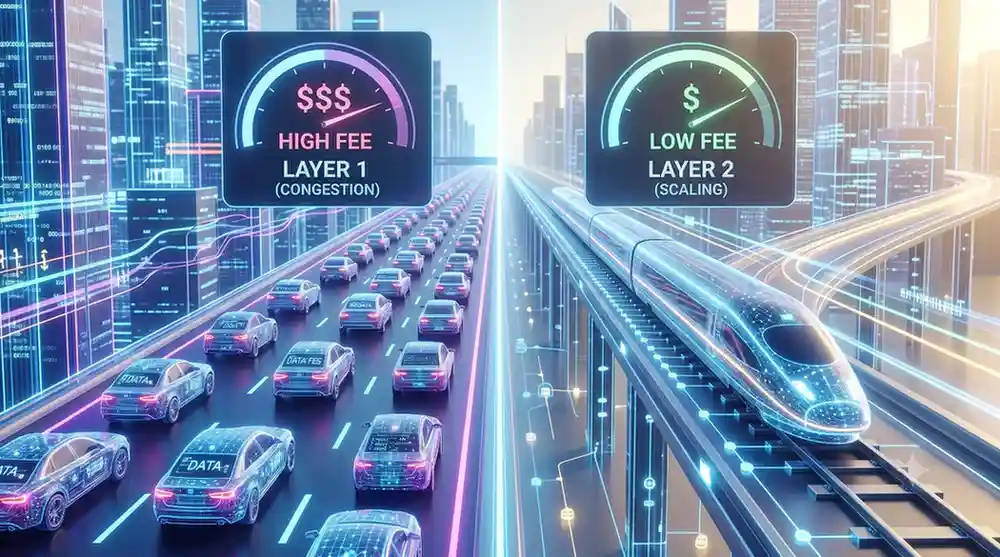
If you are tired of paying high fees on main networks (Layer 1), the ultimate solution is already here. The biggest trend of 2026 is the massive mainstream shift toward Layer 2 scaling solutions.
Layer 2 networks process transactions off the main Ethereum chain. They bundle thousands of transactions together, compress the data, and settle them all at once. By sharing the receipt, everyone splits the cost. For more detailed insights, read our deep dive on [Ethereum Layer 2 Scaling Solutions].
Here is a quick look at how average fees compare today:
| Network | Average Fee (USD) | Best Suited For |
| Ethereum Mainnet (L1) | $0.10 – $0.50 | High-value transfers, institutional flows |
| Arbitrum One (L2) | $0.01 – $0.03 | General DeFi, active trading |
| Base (L2) | $0.01 | Consumer apps, social media, beginners |
| Solana (Alternative L1) | $0.00025 | High-speed microtransactions |
As you can see from tracking [Layer 2 daily transactions], moving your everyday activity to a Layer 2 network is the easiest and most effective way to slash your costs from dollars to literal pennies.
Future Outlook: Will Gas Fees Ever Disappear?
The short answer is no, gas fees will likely never disappear completely. However, they are becoming so cheap that you will soon stop noticing them.
With upcoming upgrades like Ethereum’s “Glamsterdam” and the widespread adoption of “Account Abstraction,” developers are changing how crypto apps work. In the near future, the decentralized apps (dApps) you use will likely pay the gas fees on your behalf. This is just like how traditional tech companies pay for the server costs when you upload a photo to social media.
Zero-knowledge (ZK) technology is also advancing rapidly. These cryptographic proofs compress blockchain data even further, promising a near future where millions of daily transactions cost just a fraction of a cent combined.
Conclusion
So, what is gas fee in crypto? It is simply the cost of doing business on a decentralized global computer. It pays for network security, prevents malicious spam, and rewards the network participants who keep your digital funds safe.
While gas fees used to be a major headache for early crypto adopters, the industry has evolved rapidly. Thanks to massive blockchain upgrades and the explosion of Layer 2 networks, transacting in crypto today is faster, cheaper, and more accessible than ever before.
Are you still paying fees on Layer 1, or have you already made the switch to a Layer 2 network like Base or Arbitrum? Let us know in the comments below, and don’t forget to subscribe to our newsletter for more weekly crypto insights!
2. FAQs
Q1: What is a gas fee in crypto?
A: A gas fee is a transaction charge paid to validators or miners on a blockchain network. It covers the computing power required to process and validate your transaction, such as sending funds or interacting with a smart contract.
Q2: Why do gas fees fluctuate so much?
A: Gas fees fluctuate based on network demand. When many users are trying to make transactions at the same time, block space becomes limited. Users bid higher fees to have their transactions processed faster, driving the average cost up.
Q3: How can I avoid paying high crypto gas fees?
A: You can lower your gas costs by tracking network congestion and transacting during off-peak hours (like weekend mornings). The best method, however, is using Layer 2 networks like Arbitrum, Base, or Optimism, where fees are typically a fraction of a cent.
Q4: What happens if my crypto transaction fails? Do I get my gas fee back?
A: Unfortunately, no. Even if a transaction fails (usually due to a smart contract error or setting your gas limit too low), the network validators still expended computing power trying to process it. Therefore, the gas fee is kept by the network.
Q5: What is Gwei in relation to Ethereum gas fees?
A: Gwei is a small denomination of the cryptocurrency Ether (ETH). One gwei equals 0.000000001 ETH. Because gas fees are often tiny fractions of an Ethereum coin, using Gwei makes the numbers much easier to read and calculate.
Q6: Who actually receives the gas fees I pay?
A: On modern Proof-of-Stake networks like Ethereum, the fee is split. The “base fee” is burned (permanently removed from circulation), while the optional “priority tip” goes directly to the network validator who processed your block.
Q7: Are gas fees cheaper on Layer 2 networks?
A: Yes, drastically cheaper. Thanks to recent blockchain upgrades, Layer 2 networks bundle transactions together and share the data costs. What might cost $0.50 on a Layer 1 network typically costs less than $0.02 on a Layer 2.
Q8: Can I set my own gas fee limit?
A: Yes. Most modern crypto wallets (like MetaMask or Phantom) allow you to manually adjust your gas limit and priority fee. However, if you set the fee too low during busy periods, your transaction may get stuck pending for hours or days.





Leave a Reply