
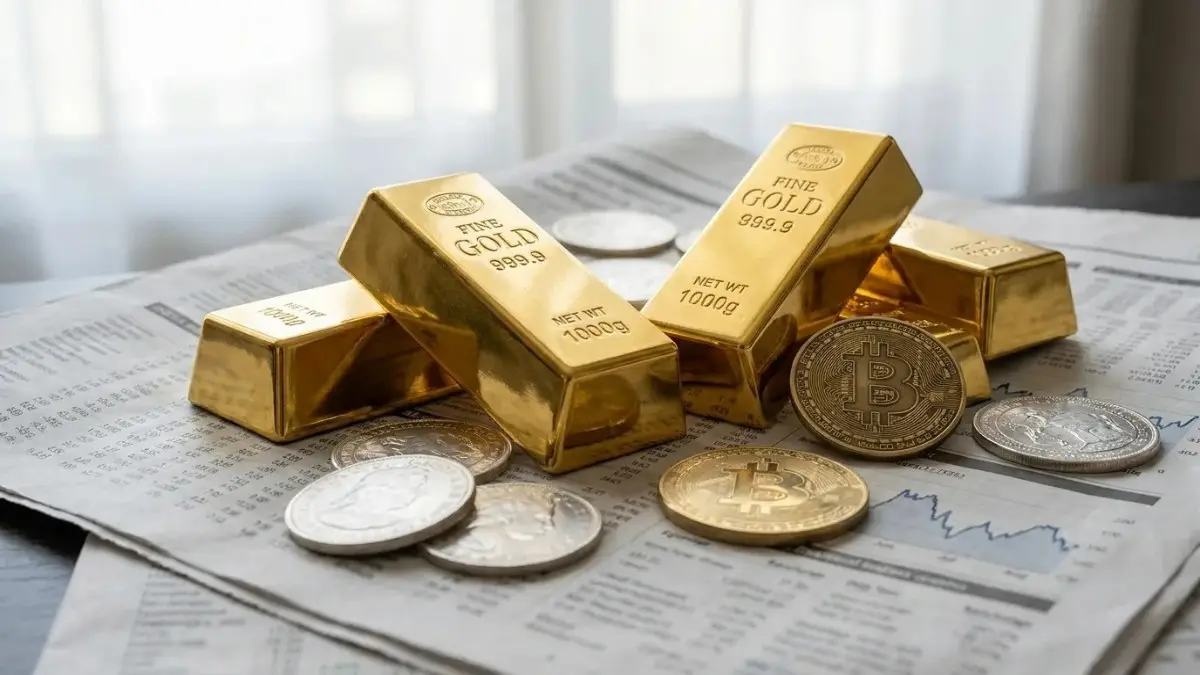
When Robert Kiyosaki talks, millions of investors listen — and lately, the “Rich Dad Poor Dad” author has been sounding one of his loudest alarms yet. His message that ”the Fed is finished” has ripped across social media, tapping into growing anxiety about inflation, ballooning national debt, and the future of the US dollar. But what does he actually mean, and should everyday investors take it seriously?
Let’s unpack it together, like two friends trying to make sense of a scary headline. Kiyosaki argues that the Federal Reserve’s decades-old playbook of “printing fake money” has reached its breaking point — and that ordinary savers will pay the price unless they own what he calls “real money.” In this article, we’ll break down his claims, the numbers behind them, the criticism they’ve drawn, and what it could mean for you.
What You’ll Learn in This Article
- What Kiyosaki means when he says “the Fed is finished”
- His bold price targets for gold, silver, and Bitcoin
- Why he calls fiat currency “fake money”
- The risks and criticisms of following his advice
- Practical, level-headed takeaways for everyday investors
If you’re new to this space, it helps to first understand the future of digital currency before weighing Kiyosaki’s more dramatic predictions.
What Did Kiyosaki Actually Say?
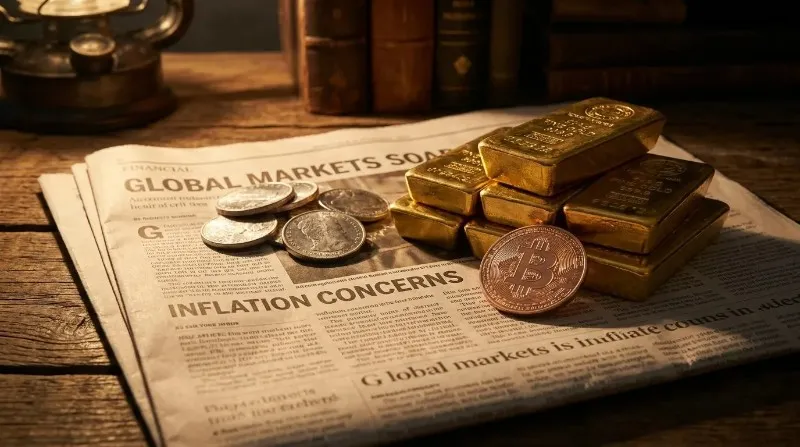
At the heart of Kiyosaki’s argument is a simple but provocative claim: the Federal Reserve and US Treasury have been “printing fake money” to cover the nation’s debts for so long that the system is now cracking. He repeatedly calls the United States “the biggest debtor nation in history” and warns that this path leads to an inevitable, historic reckoning.
Kiyosaki has tied today’s economic anxieties to structural shifts he traces back to 1974 — the birth of the “petrodollar” and the passage of retirement legislation (ERISA) — arguing that the financial architecture built five decades ago is finally showing its cracks. Livemint
His conclusion is blunt: don’t save “fake” dollars, because their value is being quietly eroded by debt and inflation.
“Crash Coming: Why I Am Buying, Not Selling”
Here’s the twist that surprises many people. Despite warning of the “biggest crash in history,” Kiyosaki says he isn’t running for the exits — he’s buying. In posts on X, he framed the coming downturn as a wealth-building opportunity for those who own the right assets.
He has set eye-popping targets: $27,000 for gold, $100 for silver, and $250,000 for Bitcoin, positioning these as the assets that will survive a currency crisis. He repeated his famous mantra that “savers are losers,” urging investors to accumulate hard assets even during market corrections. TradingView
The logic is consistent with a message he’s preached for years: real wealth comes from owning assets that “governments, banks, and Wall Street cannot create out of thin air.”

Why Does He Call the Dollar “Fake Money”?
Kiyosaki’s core belief is that ever since the dollar was fully detached from gold, it became a currency backed by nothing but debt and confidence. Every time the Fed “prints” more to fund deficits, he argues, it dilutes the purchasing power of the dollars sitting in your bank account.
This is why he pushes gold, silver, and Bitcoin — assets with limited supply that can’t be endlessly created. For readers weighing digital versus physical stores of value, our guide on how to start investing in crypto safely offers a grounded starting point.
✦ Why Some Investors Listen
- Track record of attention: Kiyosaki has warned about fiat and debt for decades, and inflation has indeed eroded savings.
- Hard-asset logic: Gold and Bitcoin have historically attracted capital during currency uncertainty.
- Simple, memorable messaging: “Savers are losers” and “buy real money” are easy to grasp.
- Alignment with real concerns: US national debt and deficits are genuinely at record highs.
✦ Challenges, Risks, and Criticism
Now for the honest part — because blindly following any influencer with your money is dangerous.
Critics point out that Kiyosaki has predicted crashes repeatedly for years, and markets have often continued climbing regardless. His price targets ($250K Bitcoin, $27K gold) are extraordinary and far from guaranteed. There’s also an inherent conflict of interest: he openly promotes assets he already owns, including gold and silver mines.
- Perma-bear problem: Repeated crash calls eventually “come true,” but timing is everything.
- Extreme targets: His forecasts are speculative, not analysis-backed certainties.
- Volatility risk: Gold, silver, and especially Bitcoin can swing violently.
- Not personalized advice: His broad warnings ignore your individual situation, risk tolerance, and timeline.
For balanced context, mainstream outlets note that Kiyosaki’s “biggest crash in history” framing is a recurring theme rather than a precise forecast. Times of India
✦ Future Outlook
Whether or not “the Fed is finished,” Kiyosaki has undeniably tapped into a real and growing conversation about debt, inflation, and the long-term role of central banks. The trend toward diversifying into hard assets and Bitcoin isn’t unique to him — institutional interest in both gold and crypto has been rising. What remains uncertain is the timing and scale of any correction. The sensible path for most investors lies somewhere between panic and complacency: staying informed, diversifying thoughtfully, and never betting the farm on a single dramatic prediction.
The Bottom Line
Robert Kiyosaki’s “the Fed is finished” declaration is equal parts warning and marketing — a genuine concern about debt and inflation wrapped in his signature dramatic style. His advice to own gold, silver, and Bitcoin reflects a real strategy of hedging against currency debasement, but his sky-high price targets and repeated crash calls deserve healthy skepticism. The smart move isn’t to blindly buy or dismiss him, but to understand the underlying risks he’s pointing at and make informed, diversified decisions for yourself.
What’s your take — is Kiyosaki a visionary or a perpetual doomsayer? Share your thoughts in the comments, pass this article along to a friend watching the markets, and subscribe to the ThePulseTime newsletter for clear-eyed analysis. And here’s a question worth pondering: if the Fed’s model really is “finished,” what would actually replace it?
FAQs
1. What does Robert Kiyosaki mean by “the Fed is finished”? He argues that the Federal Reserve’s decades-long practice of printing money to cover US debt is unsustainable and reaching a breaking point that will devalue the dollar.
2. What assets does Kiyosaki recommend buying? He favors gold, silver, Bitcoin, and to some extent Ethereum, oil, and real estate — assets he calls “real money” that can’t be printed at will.
3. What are Kiyosaki’s price targets? He has cited targets of roughly $27,000 for gold, $100 for silver, and $250,000 for Bitcoin.
4. Why does Kiyosaki call the dollar “fake money”? Because it’s backed by debt and confidence rather than a hard asset like gold, and its value is eroded when the Fed prints more currency.
5. Has Kiyosaki predicted crashes before? Yes, repeatedly over many years. Critics note that while some warnings eventually align with downturns, his timing has often been early or off.
6. Is Kiyosaki’s advice reliable? It reflects one strategy — hedging against currency debasement — but it’s not personalized financial advice, and he has conflicts of interest as an owner of gold and silver assets.
7. Should I sell all my dollars and buy gold and Bitcoin? No responsible answer says “all in” on anything. Diversification and aligning investments with your own risk tolerance and goals is far wiser.
8. What is the petrodollar Kiyosaki references? It’s the system, established in the 1970s, where oil is priced in US dollars, which helped cement the dollar’s global dominance — something Kiyosaki argues is now weakening.


Leave a Reply