
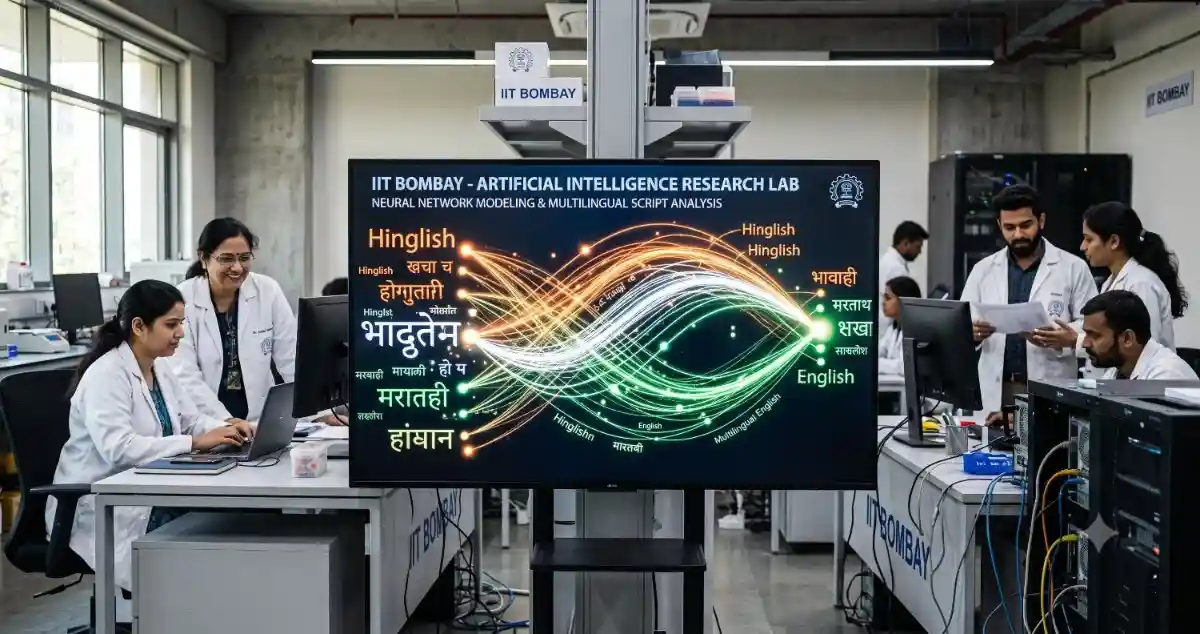
India just made a statement the entire tech world is watching. With BharatGen AI, the country isn’t merely borrowing someone else’s language model and slapping an Indian flag on it — it’s building its own foundational AI from the ground up, trained on Indian languages, culture, and knowledge systems. If you’ve been wondering what “sovereign AI” actually looks like in practice, BharatGen AI is quickly becoming the textbook example, and it’s happening faster than most people realize.
In this article, I’ll walk you through what BharatGen AI really is, who’s building it, how much money is behind it, the models it has shipped so far (yes, including the new PARAM 2), and why it matters — not just for India, but for anyone watching the global race for AI independence.
Quick Overview — What You’ll Learn
- What BharatGen AI is and why it’s called “India’s first sovereign AI”
- The institutions, funding, and government mission powering it
- A breakdown of its models: PARAM 1, PARAM 2, speech, and vision
- The real-world benefits, the risks, and where it’s headed next
- Straight answers to the questions beginners ask most

What Exactly Is BharatGen AI?
BharatGen AI is India’s first government-backed, sovereign, multilingual and multimodal generative AI initiative. In plain English: it’s a homegrown effort to build large language models (LLMs) that natively understand Indian languages, contexts, and culture — the way global tools like ChatGPT understand English.
The word “sovereign” is doing a lot of heavy lifting here. It means the models, the training data, and the underlying infrastructure are owned and controlled within India, rather than depending on foreign platforms that could restrict access at any moment. For a nation of 1.4 billion people speaking dozens of languages, that independence isn’t a luxury — it’s strategic.
BharatGen AI covers three core pillars: text (multilingual LLMs), speech (recognition and text-to-speech), and vision (document understanding). Together, these are designed to serve sectors like healthcare, governance, education, agriculture, and banking. This is the same “AI-for-public-good” philosophy that’s reshaping how emerging technologies — much like how AI is now merging with crypto and Web3 — are being applied to solve real, everyday problems rather than just chasing hype.
Who’s Building BharatGen — And With How Much Money?
BharatGen AI isn’t a scrappy startup project. It’s a pan-India consortium led by IIT Bombay, working alongside other premier institutions like IIT Madras and roughly nine partner organizations, backed by more than 60 researchers. Ganesh Ramakrishnan of IIT Bombay serves as the Principal Investigator.
The initiative was formally launched by Union Minister Dr. Jitendra Singh in June 2025 at the BharatGen Summit — described as India’s largest generative AI and LLM summit and hackathon. According to the Press Information Bureau of India{target=”_blank” rel=”noopener noreferrer”}, it was billed as the country’s first indigenously developed, government-funded multimodal LLM for Indian languages.
The funding tells the real story of intent:
| Milestone | Detail |
|---|---|
| IndiaAI Mission allocation | ₹988.6 crore (~$112M) awarded by MeitY, Sept 2025 |
| Total government support cited | Around ₹1,293 crore across text, speech & vision |
| TIH allocation (IIT Bombay) | ~₹235 crore via the Technology Innovation Hub |
| Legal status | Registered as a not-for-profit, BharatGen Technology Foundation, Nov 2025 |
That ₹988.6 crore figure reportedly made BharatGen the single largest beneficiary of the ₹1,500 crore IndiaAI Mission tranche — a clear signal of where the government is placing its biggest bet.
The Models: PARAM 1, PARAM 2, and Beyond
Here’s where BharatGen AI gets genuinely exciting, because it has already shipped real, working models — not just press-release promises.
PARAM 1
PARAM 1 is a 2.9-billion parameter bilingual foundation model built for English and Hindi, capable of text generation and completion. It was significant enough that the team published it on arXiv, giving researchers transparency into the architecture and design choices behind India’s linguistic-diversity approach.
PARAM 2
The bigger headline is PARAM 2 — a 17-billion parameter multilingual model supporting all 22 scheduled Indian languages. This is the flagship that positions BharatGen as a serious contender, designed for governance, healthcare, banking, and education use cases across the country’s staggering linguistic landscape.
Speech and Vision Models
Beyond text, BharatGen AI is building multilingual speech recognition, text-to-speech systems, and document-understanding (vision) models. The ambition here is to create what the team calls the world’s largest dataset focused on underrepresented Indian languages, culture, and heritage.

✦ Benefits: Why BharatGen AI Actually Matters
- True language inclusivity — Millions of Indians who don’t speak English fluently can finally access AI in their mother tongue.
- Digital sovereignty — India controls its own AI stack, insulated from foreign access restrictions.
- Sector transformation — Imagine an AI doctor speaking a regional language for telemedicine in remote villages, a use case Dr. Jitendra Singh has personally highlighted.
- Public-good focus — Governance, education, and agriculture stand to benefit, not just enterprise profit.
- Ecosystem building — Partnerships like the IBM–BharatGen collaboration announced in September 2025{target=”_blank” rel=”noopener noreferrer”} bring enterprise-grade platforms to a national mandate.
✦ Challenges and Risks
No ambitious project is without hurdles, and BharatGen AI faces some serious ones.
Compute and scale. Training frontier models demands enormous GPU resources. India is expanding beyond 34,000 GPU units, but competing with the compute budgets of global tech giants remains a steep climb.
Catching up on model size. A 17B-parameter model is impressive, but the frontier is racing toward trillion-parameter systems. There are already discussions about a 1-trillion-parameter LLM ambition within the broader IndiaAI consortium — bridging that gap will take sustained funding and talent.
Data quality and bias. Building the “world’s largest” Indian-language dataset is a massive undertaking, and ensuring it’s clean, representative, and free of bias across 22 languages is no small feat.
This is a familiar pattern in fast-moving tech sectors — the same tension between ambition and execution that shapes debates around AI regulation and government policy worldwide. Governance frameworks will decide whether sovereign AI empowers citizens or overreaches.
✦ Future Outlook
The trajectory is steep and deliberate. With over a billion rupees committed, a growing consortium, enterprise partners like IBM and Tech Mahindra in the mix, and a clear pipeline from PARAM 1 to PARAM 2 and beyond, BharatGen AI looks less like an experiment and more like national infrastructure in the making.
The bigger vision is verticalization — moving from general-purpose LLMs to specialized, sector-specific AI for agriculture, manufacturing, logistics, and weather forecasting. If India pulls this off, it could become a template for other developing nations wanting AI that reflects their own languages and values rather than a Silicon Valley default.
Conclusion: A Defining Moment for Indian AI
BharatGen AI represents something rare: a large, coordinated, well-funded push to build foundational AI that genuinely serves a nation’s diversity. From PARAM 1’s bilingual roots to PARAM 2’s 22-language reach, backed by nearly ₹1,000 crore and led by IIT Bombay, this is India planting its flag in the global AI race — on its own terms.
The challenges around compute, scale, and governance are real, but the direction is unmistakable. Sovereign, inclusive, multilingual AI is no longer a slide in a presentation. It’s shipping.
Enjoyed this deep dive? Drop your thoughts in the comments, share this article with a friend who’s curious about India’s AI future, and subscribe to the ThePulseTime newsletter so you never miss our next breakdown of the tech shaping tomorrow.
So here’s my question for you: Do you think BharatGen AI can realistically close the gap with global frontier models — or will compute and scale keep India a step behind? Let me know below.
FAQs
1. What is BharatGen AI? BharatGen AI is India’s first government-backed sovereign, multilingual, and multimodal generative AI initiative, building text, speech, and vision models rooted in Indian languages and culture. It’s led by IIT Bombay under the IndiaAI Mission.
2. Who is building BharatGen? A pan-India consortium led by IIT Bombay, involving institutions like IIT Madras and roughly nine partners with over 60 researchers. Ganesh Ramakrishnan of IIT Bombay is the Principal Investigator.
3. How much funding has BharatGen received? BharatGen was allocated ₹988.6 crore under the IndiaAI Mission in September 2025, with total government support reported around ₹1,293 crore across text, speech, and vision models.
4. What are PARAM 1 and PARAM 2? PARAM 1 is a 2.9-billion parameter bilingual (English–Hindi) foundation model. PARAM 2 is a larger 17-billion parameter multilingual model supporting all 22 scheduled Indian languages.
5. How many languages does BharatGen support? BharatGen is designed to support 22+ scheduled Indian languages across its text, speech, and document-vision models.
6. Why is BharatGen called “sovereign AI”? Because its models, data, and infrastructure are developed and controlled within India, reducing dependence on foreign AI platforms that could restrict access.
7. What sectors will BharatGen AI serve? Priority sectors include healthcare, governance, education, agriculture, banking, and finance — with a strong public-good focus like regional-language telemedicine.
8. Is BharatGen a company? Yes. In November 2025, it was formally registered as a not-for-profit entity, BharatGen Technology Foundation, at IIT Bombay’s Powai campus.




Leave a Reply